
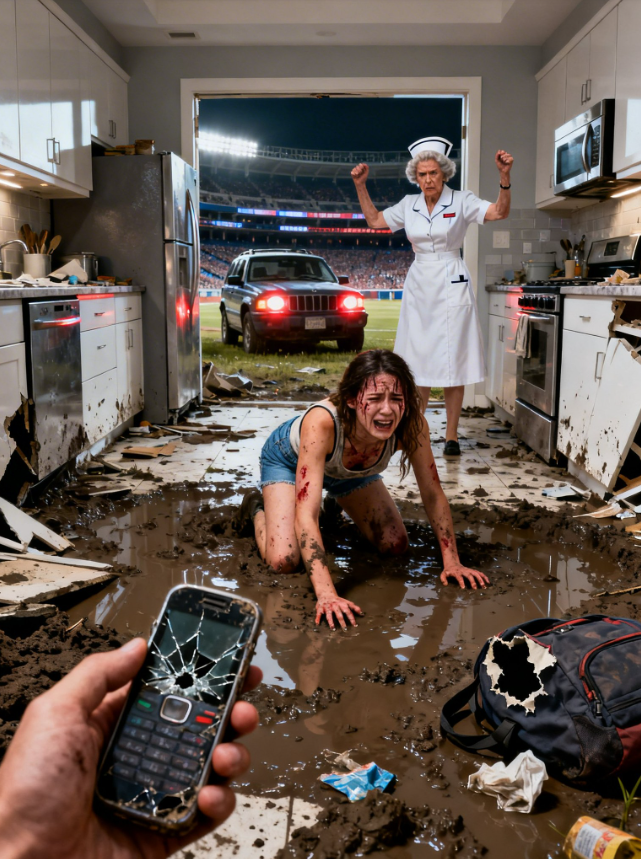
On a Classified Mission, I Heard the Police Chief Laugh as the Mayor’s Son Destroyed My Family
I was three thousand miles from home, wearing a different name, living inside a lie that kept other people alive.
The kind of work that gets stamped CLASSIFIED isn’t glamorous. It’s long hours under bad lights, bitter coffee, and instructions that come in clipped sentences from men who never raise their voices. It’s learning to breathe like you belong where you don’t. It’s waiting—always waiting—for the moment when someone slips and you have to decide whether to catch them or let them fall.
That night, I was crouched behind a concrete barrier outside a building that didn’t officially exist. The air tasted like dust and diesel. My earpiece hissed with soft voices—codes, coordinates, distances. A green light blinked on my wrist display, steady as a heartbeat.
I had one more step to take before we pulled out. One more glance at the man in the window. One more confirmation.
Then my phone vibrated in my pocket.
Not the secure line. Not the one routed through the team.
My real phone.
The one only one person was supposed to call.
Amelia.
For a second, I stared at the name like it belonged to someone else.
My wife didn’t call me on missions. She knew better. She knew the rules. We both did—because I’d made them rules in our house.
But rules don’t matter when the world breaks.
I thumbed the answer and pressed the phone to my ear. “Millstone Logistics,” I said automatically, my cover voice sliding into place like it always did.
I heard screaming.
Not a sound effect. Not a sharp gasp. It was raw, ugly terror—like someone had ripped a door off its hinges inside her chest.
“Ethan—” she choked. “Ethan, it’s Lila—”
My blood froze so hard my fingers went numb.
Lila wasn’t just our daughter. She was the bright, stubborn center of our home. Twenty-one years old, home from college for the weekend, always laughing at my terrible jokes, always trying to act tougher than she felt.
“What happened?” I forced the words out. I was still crouched behind a barrier, still watching a window, but my world had shrunk to the sound of my wife’s voice.
“She’s—she’s broken,” Amelia sobbed. “She won’t—she won’t talk. She keeps shaking. The mayor’s son and his friends… they hurt her. They—”
Her voice collapsed into a strangled noise I’d never heard from her before.
I squeezed my eyes shut so hard it hurt. Behind my eyelids I saw Lila at eight years old, missing a front tooth, holding up a “science project” that was basically glitter and hope. I saw her at sixteen, insisting she didn’t need a ride to the dance. I saw her last month on a video call, rolling her eyes at me like I was the embarrassing dad she’d always claimed I was.
And now my wife was telling me someone had taken a part of her away.
“Where are you?” I asked. My voice sounded calm. Too calm. Like a man standing on thin ice pretending he didn’t hear it crack.
“At Mercy General,” Amelia said. “But—Ethan, listen—”
A new sound slipped into the call.
A laugh.
Low. Confident. Like a man who knew he’d never pay for what he’d done.
Then a voice—deep and familiar—leaned into the background, close enough to Amelia’s phone that it made my skin crawl.
“Go home, Amelia,” the police chief drawled, amused. “Your husband is just a truck driver. He can’t save you.”
Something inside me went quiet.
The kind of quiet that happens right before a storm.
I opened my eyes and looked back at the window I’d been watching. The mission. The target. The reason I’d been away for three weeks, pretending to haul freight across state lines for “Millstone Logistics.”
I heard my team leader in my ear. “Pierce, you with us?”
Pierce. That was my name here.
Back home, I was Ethan Hayes. Husband. Father. The “truck driver” who came home tired and grease-stained and kissed his wife on the forehead like that was the whole story.
I swallowed hard. “Amelia,” I said, “put the phone down. Don’t argue. Don’t say anything that makes them notice you.”
“Ethan, please—”
“Do it,” I said, and for the first time in our marriage my wife heard the voice I never used at home. The one that didn’t allow debate.
I heard her breathe in, shaky, and then the muffled sound of her hand covering the microphone.
The police chief’s laugh faded, but his confidence didn’t.
I listened anyway. I listened like the world depended on it.
Then I said, softly, so softly my own men wouldn’t hear it, “I’m coming.”
The line went dead.
I stood up too fast. The concrete barrier scraped my vest.
My team leader, a man named Rourke with eyes like cut glass, stared at me. “What was that?”
“Family emergency.” My mouth felt dry. “I have to go.”
He didn’t blink. “You don’t ‘have to go.’ We’re in position.”
“I’m out,” I said.
Rourke’s jaw tightened. “Pierce, you walk away now, you compromise—”
“I don’t care.” The words came out before I could sand them down.
The air snapped with tension. Two operators shifted slightly, hands hovering near their weapons, not to threaten me but because everything in our world was built on control.
Rourke lowered his voice. “Talk to me.”
I met his eyes. “My daughter. Back home. She’s been attacked.”
His expression changed. Not softened—men like us didn’t soften. But something dark moved behind his gaze, like he’d just found a new target.
Rourke glanced at the others. Then at the building. Then back at me.
“You’re going to blow your cover,” he said.
“I don’t care,” I repeated.
For a long beat, the only sound was the hiss of the earpiece and the distant buzz of a city that didn’t know we existed.
Then Rourke cursed under his breath. “Get in the vehicle.”
Relief hit me so hard my knees almost gave.
He pointed a finger at my chest. “But listen carefully. You’re not going alone.”
“I didn’t ask—”
“You’re not asking.” His voice was iron. “If the local law is corrupt, you need protection. You need witnesses. You need someone to keep you from doing something you can’t come back from.”
My throat tightened. “Thank you.”
Rourke’s eyes stayed hard. “Don’t thank me. Just don’t make me clean up a mess I can’t bury.”
Sixteen hours later, I crossed the county line into West Haven, Missouri—the town that looked like every postcard America ever printed and hid rot behind white fences.
The sun was dropping low, turning the fields gold. Grain silos rose like monuments. The diner on Main Street still had the same crooked neon sign: MABEL’S HOME COOKIN’.
I’d spent my whole life learning how to blend into places like this. I could pass for ordinary. That was the point.
A black SUV followed me at a distance, unmarked, quiet. Inside were two men from my team—Rourke’s idea of “not alone.” They’d borrowed identities as easily as breathing. To anyone watching, they were just business travelers. To me, they were a leash and a lifeline.
My hands tightened on the steering wheel as Mercy General came into view.
I parked, stepped out, and suddenly the air felt wrong. Like the town had decided to hold its breath.
Inside the hospital, the smell of antiseptic hit me like a wall.
Amelia was in the waiting area, hunched forward, hands twisted together so tightly her knuckles were white. Her hair, usually pulled into a neat braid, was falling apart. Her eyes were red and swollen, and when she saw me, she stood so fast her chair scraped.
“Ethan,” she whispered, and then she was in my arms.
She felt smaller than I remembered. Or maybe I felt bigger because something inside me had expanded into a monster.
I held her carefully. “Where is she?”
Amelia pulled back, eyes shining with fear. “They won’t let me stay in the room. The nurse said it’s protocol but—Ethan, the police chief was here. He smiled at me like—like I was nothing.”
“Where is Lila?” I asked again, keeping my voice even.
Amelia pointed toward a hallway. “Room twelve.”
I started walking.
Amelia grabbed my sleeve. “Ethan, please… don’t do something—”
I looked at her, really looked at her. “I’m going to do something,” I said quietly. “But I’m going to do it right.”
She searched my face like she didn’t recognize me.
That was fair. I’d spent years making sure she didn’t.
I went to room twelve and pushed the door open slowly.
Lila lay in the bed, her dark hair spread over the pillow, her face turned slightly away. A bruise bloomed along her cheekbone. Her lower lip was split. Her hands were tucked close to her chest like she was trying to disappear into herself.
Machines beeped softly beside her.
For a second I couldn’t breathe.
Then her eyes flicked toward me, and I saw the truth of what Amelia had said.
My daughter looked like she’d left her body behind and didn’t know how to come back.
“Lila,” I whispered.
She didn’t answer. Her gaze drifted away, unfocused, like she was staring at something only she could see.
I moved to her bedside and sat down slowly, careful not to startle her.
“I’m here,” I said. “You’re safe.”
Her throat bobbed. She blinked once, slow and heavy.
Then a tear slid down the side of her face and vanished into her hair.
I reached out and placed my hand on the blanket near her wrist—not touching her skin, just close enough that she could choose to move away or closer.
“Whatever happened,” I said, voice shaking despite everything, “it wasn’t your fault.”
Her fingers twitched. That was all.
But it was something.
A nurse stepped into the doorway. She froze when she saw me, then forced a professional smile. “Sir, visiting hours are—”
“I’m her father,” I said.
The nurse hesitated. “The police are handling—”
I turned my head slowly, just enough for her to see my eyes.
“Who told you that?” I asked.
Her smile faltered. “Chief Harlan… he said—he said it’s a sensitive case.”
I nodded, like I understood, like I wasn’t memorizing every word. “Thank you,” I said. “We’ll be quiet.”
The nurse left, but I felt her fear linger in the room.
When the door clicked shut, I leaned closer to Lila and lowered my voice.
“Baby,” I said, “I need you to listen to me.”
Her gaze flicked to mine, just for a heartbeat.
“I can’t fix what happened,” I said. “But I can stop them. I can make sure they never do this to anyone else.”
Her eyes filled again, and she swallowed hard.
Then, barely audible, she whispered, “They said… no one would believe me.”
Rage burned so hot it made my vision blur.
I smiled anyway—small, careful, like a promise.
“I believe you,” I said. “And I’m not just a truck driver.”
Chief Harlan’s office smelled like cheap cologne and stale coffee.
He leaned back in his chair like he owned the world. His uniform shirt was crisp. His badge shone. A framed photo of him shaking hands with the mayor sat on a shelf behind him.
When I walked in, he didn’t stand.
He just looked me up and down, slow and insulting.
“Well,” he said. “If it isn’t Amelia’s hero.”
I shut the door behind me. I hadn’t come alone—Rourke’s men waited outside, out of sight. But this part was mine.
“I want the report,” I said.
Harlan smirked. “What report?”
“The report on my daughter’s assault.”
He raised his eyebrows. “Now, now. Let’s choose our words carefully. Your daughter had a little incident. Kids drink, they make bad choices, sometimes they regret them in the morning.”
My hands flexed at my sides. I kept them there.
“Her injuries were documented at the hospital,” I said. “She gave a statement.”
Harlan laughed—soft, condescending. “Did she? Funny, I don’t have it.”
I stepped closer to his desk. “You were at the hospital.”
He leaned forward, eyes gleaming. “I was. I told your wife the truth. That you can’t do anything.”
I stared at him.
He smiled wider. “You haul freight. You think you can come in here and throw your weight around because you’re upset? Listen, Hayes—this town doesn’t bend for people like you.”
“People like me,” I repeated.
He tapped his pen. “Not connected. Not important. Not—”
I moved fast enough that the air snapped.
My palm hit his desk, not hard enough to break anything, but hard enough to make him flinch.
The smirk wavered.
I leaned in, voice low. “I’m going to ask you one time,” I said. “Are you protecting the mayor’s son?”
Harlan’s eyes narrowed. “You better watch yourself.”
I smiled. It wasn’t friendly. “You laugh at my wife again,” I said, “and you’ll learn exactly what I do for a living.”
His face tightened, but his fear fought with his pride. “You threatening an officer?”
“No,” I said. “I’m warning a coward.”
I stepped back, turned, and walked out before my restraint broke.
Outside, the hallway was quiet. One of Rourke’s men—Gaines—fell into step beside me.
“How’d it go?” he murmured.
“He’s dirty,” I said. “And he thinks he’s untouchable.”
Gaines nodded. “They always do.”
I looked back at the office door. “Not for long.”
That night, Amelia sat at the kitchen table with her hands wrapped around a mug she hadn’t touched.
The house felt wrong without Lila’s music blasting from her room, without her footsteps on the stairs. She was still at the hospital for observation, and Amelia hated being away from her—but the doctors said rest, quiet, controlled visitors.
I stood by the sink, staring out the window into the dark yard.
“You’re scaring me,” Amelia said softly.
I turned.
Her eyes were steady now, but tired. “That thing you said to Lila… about not being just a truck driver.”
I exhaled slowly. There it was. The truth I’d kept folded up between us for years.
I walked to the table and sat down across from her.
“Millstone Logistics is real,” I said. “I do drive trucks sometimes.”
Amelia gave a small, bitter laugh. “Ethan.”
I met her gaze. “But it’s also a cover,” I admitted. “I work for the government. The kind of work that doesn’t come with a business card.”
She stared at me, stunned.
“You lied,” she whispered.
“I protected you,” I said.
Amelia’s jaw trembled. “From what?”
I hesitated. Then told her the only truth that mattered.
“From being a target,” I said. “From being used against me.”
Amelia’s breath hitched, but her eyes didn’t leave mine. “And now?”
I reached across the table and took her hand.
“Now they already targeted you,” I said. “So I’m done hiding.”
A tear slipped down her cheek. “I don’t want revenge,” she whispered.
I squeezed her fingers. “Neither do I,” I lied gently.
Then I corrected myself. “I do. But what I want more is justice. For Lila. For every girl in this town who’s been told to shut up.”
Amelia swallowed hard. “They’ll come after us.”
“I know,” I said.
She searched my face. “Then why are you so calm?”
I leaned in. “Because they think they’re hunting a truck driver,” I said softly. “And they’re not.”
The mayor’s son was named Bryce Caldwell.
I’d watched him grow up in this town—golden boy, quarterback, rich smile, a future handed to him like a trophy. His father, Mayor Tom Caldwell, had been elected twice on promises of “family values” and “keeping West Haven safe.”
Safe for who?
Bryce and his friends had a habit of taking what they wanted. Most of the town pretended not to notice. The ones who did got warned off.
And Chief Harlan made sure warnings stuck.
I didn’t need rumors. I needed evidence.
So we built a case the way my world always built cases: quietly, methodically, with patience that felt like swallowing glass.
Gaines and the other operator, Silva, posed as federal auditors looking into misused municipal funds. That got them invited into rooms where people bragged without realizing they were confessing.
I focused on Bryce.
He liked to drink at a private barn outside town—Caldwell property, guarded by friends whose dads worked for the police. The kind of place where bad decisions didn’t become public.
We watched. We listened. We documented.
Meanwhile, Amelia stayed with Lila, holding her hand in the hospital and then at home when the doctors finally released her.
Lila didn’t say much. She flinched at sudden noises. She stared at walls like they were enemies. But she was alive. She ate small bites of toast. She let Amelia brush her hair.
And one night, she asked for me.
I sat on the edge of her bed, hands clasped, trying not to look like a man ready to burn the world down.
“I remember,” Lila said quietly, staring at her blanket. “Most of it.”
I swallowed. “You don’t have to tell me.”
“Yes,” she whispered, voice shaking. “I do. Because they keep saying it didn’t happen. Like… like if I don’t speak, it becomes true.”
I nodded, slow. “Okay.”
Lila took a breath that sounded like it hurt.
“They cornered me,” she said. “Bryce said I was ‘acting stuck-up.’ I told him to leave me alone. He laughed. They—” Her voice broke.
I leaned forward. “Lila. Stop if you need to.”
She shook her head, tears spilling. “They filmed it,” she whispered. “One of them said it was insurance. That no one would believe me anyway.”
My stomach dropped.
Filmed.
That meant there was a file somewhere. A phone. A cloud account. A piece of proof they thought made them invincible.
I forced my voice to stay gentle. “Do you know who had the phone?”
Lila squeezed her eyes shut, thinking. “Tyler,” she said. “Tyler Wren.”
I nodded. “Okay.”
She looked up at me then, eyes raw but clear. “Dad… are you really just a truck driver?”
I almost smiled. Almost.
“No,” I said. “But I’m your dad. That’s the only part that matters.”
Lila’s lower lip trembled. “Then… please make it stop.”
I touched her hand, carefully. “I will,” I promised.
And this time, I meant it.
Tyler Wren’s house sat on a dead-end road near the river.
His father worked public works. His mother taught second grade. The kind of family that would swear their boy was “misunderstood” even if he lit the town on fire.
I didn’t want a fight. I wanted the phone.
So I went at night, alone, wearing black, moving through shadows like I’d been trained to do.
I found Tyler’s truck in the driveway. I heard laughter inside—teenage arrogance that hadn’t yet met consequences.
I didn’t break in. I waited.
At 1:13 a.m., the back door opened, and Tyler stumbled out onto the porch with a beer in his hand and his phone glowing in his other palm.
He leaned on the railing, typing, grinning at something on the screen.
My hands clenched.
I stepped out of the darkness.
Tyler froze. “Who the—”
I moved fast, caught his wrist, twisted gently but enough. His beer spilled. His phone clattered to the wooden boards.
He made a choking sound. “Hey! What are you—”
I pressed him against the railing and lowered my voice.
“You hurt my daughter,” I said.
His face drained of color. “I—man, I don’t know what you’re talking about—”
I tightened my grip just a fraction. Not to break. To convince.
Tyler whimpered.
“Where’s the video?” I asked.
His eyes darted. “What video?”
I leaned closer. “Don’t lie,” I said, voice flat. “You’re not good at it.”
Tyler’s breath came fast. “It’s—it’s not here.”
“Where?” I asked.
He swallowed hard. “Bryce has it.”
I stared at him, searching for deception. His fear smelled real.
“Why?” I asked.
Tyler’s voice shook. “Bryce said it keeps everyone quiet.”
I released him, and he sagged, coughing.
He looked up at me, desperate. “Please, man. Don’t—don’t tell anyone I talked.”
I picked up his phone from the porch.
Tyler lunged. I held up a hand, and he stopped like a dog trained by pain.
“This phone,” I said, “is evidence.”
His eyes widened. “You can’t—my dad—Chief Harlan—”
I looked at him. “Tell your dad,” I said softly, “that if he calls the chief, he’ll be explaining it to the FBI instead.”
Tyler’s mouth opened and closed like a fish.
I slipped back into the dark with the phone in my pocket, heart hammering.
Now I knew where to look.
And who to crush.
Bryce Caldwell didn’t expect consequences.
That was his biggest mistake.
Two nights later, we watched him at the barn. He arrived in his polished truck, music thumping, laughing like the world was a joke written for him.
His friends gathered around, passing bottles, bragging. One of them mimicked a girl’s crying voice, and they all laughed.
My fists clenched so hard my nails dug into my palms.
Gaines’ voice murmured in my earpiece. “We have audio. Keep it clean.”
Clean. Right.
Justice, not revenge.
I repeated it like a prayer.
Then Bryce pulled out his phone.
He showed something to the others. Their laughter turned sharp, cruel.
I didn’t need to see the screen to know what it was.
My vision narrowed.
I took one step forward—
And then headlights swept across the gravel road leading to the barn.
A police cruiser.
My body went still.
The cruiser stopped. The driver door opened.
Chief Harlan stepped out.
He walked toward Bryce like they were family.
He clapped Bryce on the shoulder. Bryce laughed and raised his bottle like a toast.
Corruption, wrapped up in friendly gestures.
Gaines swore softly in my ear. “We need the chief on tape too.”
I forced myself to breathe.
Harlan said something, and Bryce leaned in, grinning.
Then Harlan looked out into the darkness—straight toward where we hid.
For a second, I thought he’d seen us.
My heart thudded.
But he just spat into the gravel and laughed again, loud and satisfied.
The sound made my stomach turn.
Then, clear as day, Harlan’s voice carried over the night air:
“She won’t talk. They never do.”
Bryce replied, smug: “And if she does?”
Harlan chuckled. “Then we make her sorry.”
Gaines’ voice was tight. “Got it.”
My throat burned. I stayed still. Stayed silent. Stayed disciplined.
But inside me, something snapped into place.
This wasn’t just about Lila anymore.
This was about a whole town being held hostage by men who smiled while they did it.
And I was done being patient.
The next morning, a black sedan rolled into West Haven with plates nobody recognized.
Two men in suits stepped out. They didn’t announce themselves. They didn’t stop at the diner. They went straight to the station.
By noon, word spread like wildfire: feds.
Chief Harlan stormed into the mayor’s office, shouting. Mayor Caldwell’s face went pale.
I watched from across the street, sitting in my old beat-up truck like the “truck driver” they thought I was.
Amelia sat beside me, hands clenched. “Is this it?” she whispered.
“It’s the beginning,” I said.
Inside the station, Gaines and Silva were handing over what we’d gathered—audio, witness statements, medical documentation, and Tyler Wren’s phone, which contained messages and deleted files we’d recovered.
Enough to open a door.
Maybe not enough to slam it shut yet.
But we weren’t done.
That night, Bryce Caldwell panicked.
Panic makes arrogant men sloppy.
He showed up at our house.
I was expecting him.
He came with two friends, thinking numbers made him powerful. They climbed out of the truck with swagger that didn’t quite hide fear.
Amelia stood at the front window, trembling. “Ethan…”
“Stay back,” I told her gently. “Lock Lila’s door.”
Amelia hesitated. Then she did it—because she’d seen something in me now that she couldn’t unsee.
I stepped onto the porch.
Bryce looked up at me, sneering. “Well, look at that. The truck driver.”
I didn’t answer.
He walked closer, hands spread like he was reasonable. “Listen, man. This is getting out of hand. People are talking. My dad’s pissed.”
I stared at him. “Good.”
His smile faltered. “Your girl… she’s causing problems.”
My jaw tightened. “She’s my daughter.”
Bryce’s eyes flashed. “Then control her.”
One of his friends laughed nervously. The other shifted, watching the windows.
Bryce lifted his chin. “Chief Harlan says if she keeps running her mouth, things could get… unpleasant.”
I took one step down off the porch.
Bryce stiffened, but he didn’t retreat. “You think you’re tough?” he asked. “You think you’re gonna scare me? This town belongs to my family.”
I nodded slowly. “That’s what you think.”
Bryce’s smirk returned, shaky. “What’re you gonna do, haul me away in your truck?”
I smiled, small and cold. “No,” I said. “I’m going to let you talk.”
His brow furrowed. “What?”
I lifted my phone in my hand, screen glowing. “Say it again,” I said softly. “About my daughter.”
Bryce’s eyes narrowed. “Are you recording me?”
“Keep talking,” I said.
Bryce lunged for my phone.
I moved faster.
I caught his wrist, twisted, and in one smooth motion put him face-first against the porch railing. Not hard enough to break bones. Hard enough to make him understand physics didn’t care about his last name.
He yelped. His friends froze.
Bryce struggled. “Let go—!”
I leaned close to his ear. “You filmed her,” I said. “Where is it?”
He went still.
Then he laughed—trying to bring back confidence. “I don’t know what you mean.”
I tightened my grip just enough. Bryce hissed.
His bravado cracked. “Okay—okay! It’s on my phone. In a folder. I didn’t—”
“You did,” I said.
His voice turned shrill. “It was a joke!”
I stared at him, breathing slow.
“A joke,” I repeated.
Behind me, the porch light flicked on.
Gaines stood in the doorway, holding a badge Bryce had never seen before.
Federal.
Bryce’s face went white.
Gaines spoke calmly. “Bryce Caldwell,” he said, “you’re under arrest.”
Bryce’s friends bolted.
Gaines’ partner—Silva—was already moving, fast and quiet, intercepting them in the yard.
Bryce started screaming. “You can’t! My dad—Chief Harlan—!”
I pushed him forward into Gaines’ waiting grip.
Gaines looked at him like he was something scraped off a boot. “We can,” he said.
Then, softer, for my ears only: “We will.”
The arrest cracked the town open.
In the following days, more stories spilled out—girls who’d been threatened, parents who’d been paid off, witnesses who’d been told they’d lose their jobs if they spoke.
Chief Harlan tried to act like he was in charge. He tried to bully federal agents the way he bullied locals.
It didn’t work.
They searched his office. They found files that should’ve been there and weren’t. They found cash where it didn’t belong. They found phone records, deleted messages, a trail that led right back to the mayor’s doorstep.
Mayor Caldwell held a press conference, sweating through his suit, insisting his son was innocent, insisting West Haven was “a good town.”
The feds didn’t argue with him.
They just waited.
And then they arrested him too.
Amelia sat beside Lila on the couch when the news broke on television. The reporter spoke over footage of handcuffs, flashing lights, angry faces.
Lila didn’t smile. She didn’t cheer.
She just exhaled—long and shaky—like she’d been holding her breath since the night it happened.
I knelt in front of her, careful, giving her space.
“It’s not over,” I said gently. “There will be court. There will be questions. There will be days that feel unbearable.”
Lila’s eyes met mine. “But they can’t laugh anymore,” she whispered.
I swallowed past the lump in my throat. “No,” I said. “They can’t.”
Amelia touched Lila’s hair, smoothing it back like she used to when Lila was little.
“I’m sorry,” Amelia whispered to me later that night, when Lila had finally fallen into an exhausted sleep. “For believing we were powerless.”
I shook my head. “You weren’t,” I said. “You called me. You didn’t let them silence you. That’s power.”
Amelia stared at me. “And you… you came home and turned into someone I didn’t know.”
Để lại một phản hồi